Compost
Compost Giveaway
The City of Riverbank is giving free compost in partnership with organic waste recycler, Gilton Solid Waste. This compost is a product of our curbside organics recycling program. The program is a way to give back to the community while meeting regulations required by Senate Bill 1383.
Guidelines:
- The City of Riverbank will have scheduled days for the Compost Giveaway.
- Compost will be offered on a first-come, first-served basis. There are no reservations.
- Residents must bring their own shovel, containers or buckets to load the materials yourself.
- Residents will need to self-load their own vehicle.
- Pick-up trucks must tarp their loads.
- Compost available while supplies last.
Compost Giveaway Schedule
Dates:
- Only Saturday, April 11, 2026
- Friday, May 15, 2026 and Saturday, May 16, 2026
- Friday, June 12, 2026 and Saturday June 13, 2026
- Friday, July 10, 2026 and Saturday, July 11, 2026
Time: 8:00 a.m. until 12:00 p.m. (or until compost runs out)
Pick-up Location: 3134 Sierra Street (corner of Sierra & 2nd St), Riverbank, CA
Calendario de sorteo de abono
Fechas:
- Solamente sabado, 11 de mayo 2026
- Viernes, 15 de mayo 2026 y sabado, 16 de mayo 2026
- Viernes, 12 de junio 2026 y sabado, 13 de junio 2026
- Viernes, 10 de julio 2026 y sabado, 11 de julio 2026
Horario: 8:00 a.m. - 12:00 p.m.
Ubicación: 3134 Sierra Street (la esquina de Sierra y 2nd), Riverbank, CA
What is compost?
Compost is nature’s way of recycling. Recycling food and other organic waste into compost provides a range of environmental benefits, including improving soil health, reducing greenhouse gas emissions, recycling nutrients and mitigating the impact of droughts. Compost is decomposed organic matter, often derived from urban plant debris and food waste.
Reasons why you should use compost instead of fertilizer:
- Compost is free and sustainable! It gives leftover food scraps a new life.
- Because compost is made of organic materials, it contains the good nutrients your plants need and none of the harmful additives.
- Compost eliminates the chance of rain carrying fertilizer toxins to our storm drains.
- Compost increases plant growth.
- Compost improves soil structure through the addition of beneficial bacteria and fungi.
- Compost improves soil water retention.
How do I use compost?
- Use it as a soil amendment: Mix compost into your garden soil to improve its structure, fertility, and water-holding capacity. For best results, add a layer of compost to your garden beds in the fall or early spring, and mix it in with a garden fork or tiller.
- Use it as a top dressing: Spread a thin layer of compost over your lawn, garden beds, or potted plants to provide a slow-release source of nutrients. Be sure to avoid smothering the plants’ stems or crowns.
- Make compost tea: Steep a handful of compost in a bucket of water for a few days, stirring occasionally, to create a nutrient-rich liquid fertilizer. Dilute the compost tea with water and use it to water your plants. Use it as a seed starting mix:
- Mix compost with vermiculite or perlite to create a nutrient-rich seed starting mix that promotes healthy seedling growth.
-
Julissa Garcia
Administrative AssistantOffice (209) 863-7127
Fax (209) 869-1849
Email
Kathleen Cleek
Capital Project/Regulatory Compliance Manager
Office (209) 863-7170
Fax (209) 869-1849
Laura Graybill
Senior Project CoordinatorOffice (209) 863-7155
Fax (209) 869-1849
At Home Composting
Food scraps and yard waste breaking down in a compost pile with oxygen makes nutrient-rich compost, a superfood for plans.
Composting at home can be as simple or as complicated as you want it to be. If you aren't looking to make a big investment, you can start a simple compost bin using your food scraps and lawn clippings.
Composting organic waste to use in your garden:
- Reduces trash sent to landfills.
- Cuts methane climate pollution from organic waste rotting in landfills.
- Provides nutrients that activate plants to pull more carbon pollution from the air.
- Improves soil health to sequester (store) carbon from the atmosphere.
Home systems can compost: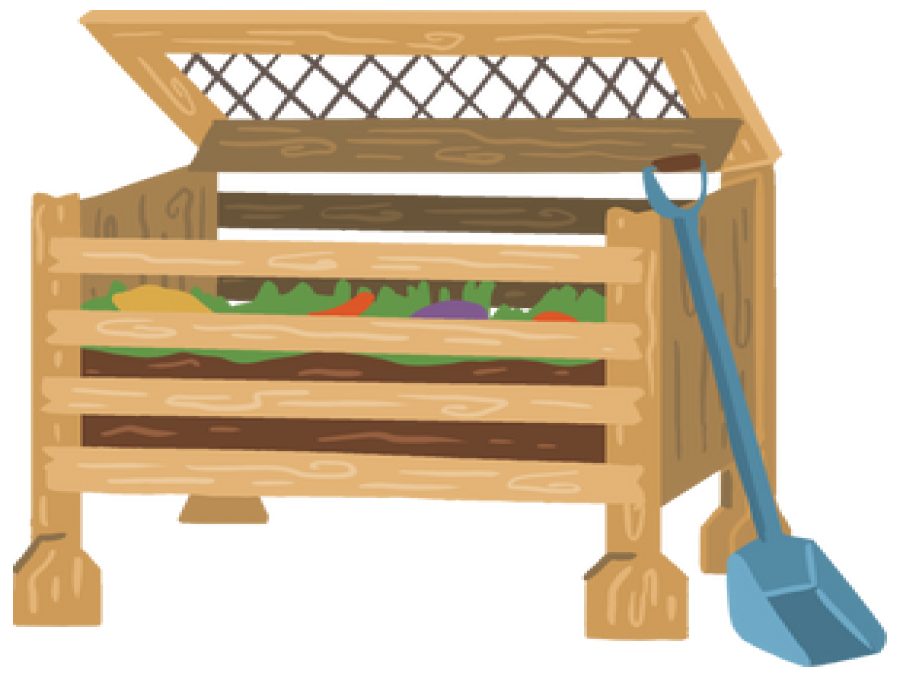
- Fruit and vegetable scraps.
- Tree and shrub trimmings.
- Fruit tree and vegetable waste.
- Lawn clippings.
- Leaves.
- Eggshells.
- Tea bags.
- Coffee grounds.
Do not compost meat, fat, dairy or a lot of baked goods in home compost.
This easy composting guide shares:
- How compost fights climate change.
- How compost helps your garden.
- How to select a bin and yard location.
- How to compost.
- Top fixes for compost issues.